How Much Do Laundromats Make? Full Profit Breakdown for 2025

Laundromats are among the customer-magnet businesses whose demand never fades. If you are running a low-profit commercial laundry business and are willing to boost revenue, or if you plan to
start one, this insightful guide will help you out. You’ll have a rough idea of how much laundromats make as you finish reading this blog, along with a full profit breakdown for laundry and dry-cleaning businesses in 2025. Let’s begin!

How much do laundromats make?

While the exact revenue varies among laundrettes, the profitability and ROI are influenced by certain factors like location, size, and capacity of the store, services offered, operating costs, pricing strategies, convenience, and customer services.

| The annual earnings of laundry businesses are estimated around £60,000 to £180,000 with net monthly profit margin of £1,500 to £10,000+ (differs as per factors stated above). The profit margin typically ranges between 20% and 35%.

What do you think now? Is a Laundromat profitable? We have more to explore here.

Key Factors Affecting Laundromat Earnings

1. Location

Foot traffic matters the most for this niche. You see, a local laundromat – the one near dense residential areas, apartment blocks, or universities will likely be preferred over the far-located ones.
This business also has more chances of recurring customers.

| Facilities like parking, street visibility, and safe surroundings are bonus aspects of the location that influence customers to walk in.

2. Machinery

If you are setting up a laundromat business expecting better earnings from the beginning, don’t choose average machinery. Remember, the more efficiently your machines perform, the fewer hassles you face. Also, newer equipment will consume less energy = less energy cost, does not break down frequently = no need to call the maintenance services repeatedly, cycles are faster = more cycles & revenue.

| New machinery runs on advanced technology, which keeps the owner worry-free and improves customer satisfaction.

3. Valued Services

Top-performing laundromats go an extra mile with beyond-basic services like:

  • Pick-up and delivery services
  • Drop-off wash-dry-fold services
  • Snacks, soap, and drink vending machines for on-the-go convenience
  • 24*7 smart locker access

| What customers see is feasibility, and your business earns some extra

4. Laundromats in the area

Never overlook your competitors while focusing on self-growth. The strategies of the laundromats in the area should be in sight, and you should differentiate through:

  • Technology (e.g., card or app-based payment)
  • Superior cleanliness and customer experience
  • Loyalty programs and discounts

This is to be shared as a few. You can gain insights from EPOS data to make your business perform best and outgrow competitors. Keep these tips at the core even if you are buying a laundromat business.

Calculating Laundromat Profit Margin

Here is an instance of the basic revenue model of a laundry & dry-cleaning business. It can vary according to the factors repeatedly discussed in this blog.

Type Daily Revenue Monthly Revenue

TypeDaily RevenueMonthly Revenue
Self-service£400/day£12,000
Drop-off service£450/day£13,500
Commercial contracts£300/day£9,000
Total£34,500

Expenses (utilities, rent, staff, maintenance): ~£22,000/month

Net Profit: £12,500/month

Clean Touch EPOS can help with monitoring all of these income streams and expenses for optimising your business’s ROI in real-time. This is an underrated thing, and only those who know how to make the most out of this data can drive growth using it.

How to calculate laundromat ROI for drop-off wash, dry, and fold business income?

Drop-off services typically have higher margins. Let’s say:

  • £1.50 per pound of laundry
  • Each customer brings 15 lbs = £22.50
  • 20 customers per day = £450
  • 30 operating days = £13,500 monthly revenue

Subtract expenses like wages and detergent, and you’re looking at net profit margins up to 40% on this service alone.

Laundromat Revenue from Regular Customers

A walk-in self-service laundromat sees:

  • Average spend per customer: £7–£10
  • 50–100 customers/day = £350–£1,000/day
  • Monthly revenue = £10,000–£30,000 depending on traffic

Use Clean Touch EPOS to upsell fabric softeners, loyalty credits, and premium cycles to increase the average ticket size.

| If you need help with how to buy a laundromat business, we have a comprehensive read to your rescue.

The Impact of Potential Revenue Streams on How Much Laundromat Make

Average laundromat monthly earnings in 2025

The potential revenue streams are a vital part of the laundry & dry-cleaning business plan itself, hence demanding focus while creating one. Let’s see what impact can be driven by the two major streams…

1. Residential Customers – It’s unbelievable how most of the launderers are thriving on residential customers, who form the core of the business. Offer membership discounts, basics like digital wallet or card payments, and order-related SMS updates that make for an “extra” effort on making them feel valued. This can be easily managed with a smart point-of-sale system like Clean Touch EPOS, too.

2. Commercial – Commercial clientele drives major growth for launderettes. Partnering with local commercial businesses with weekly or bi-weekly contracts will spike your revenue like anything.

Clean Touch EPOS helps with automated invoicing and pickup tracking for your commercial clients, too!

Tips for Maximising How Much do Laundromats Make a Month

The laundromats can literally increase profits every month by following these tips:

Subscription plans: Launching subscription plans will hook the customers and attract new walk-ins. Add credit points to the customer accounts, which they can use for free services later.

Pickup & delivery services: Convenience drives customers crazy! Don’t let your customers always arrive at your store, but offer pickup & delivery services, which will only expand your customer base and pull revenue along.

24*7 smart locker access: One of the best ways to keep customers in the laundromat business is smart locker services. Launch 24*7 access and see the revenue flowing.

Optimising machine layout: It could be an underrated thing, but if you care to optimise machine layout, you can witness a significant rise in turnover.

Analysis & action: Use efficient software like Clean Touch EPOS, which can be used for analysis and reporting on a daily basis so you can make the most out of your real-time data, manage staff well & take action timely. You can also identify underperforming services and improve them before it is too late.

Consistent marketing: The golden rule for staying popular is to be in the eyes of people. This applies pretty well in the commercial laundry business. Don’t pause the marketing
campaigns to attract high-intent local searchers.

Premium service offerings: How about coming up with something new at certain intervals? Your customers will never get bored of visiting you! Add premium services like express wash
cycles for those last-minute stuff or eco-cycles to draw the attention of environment lovers.

Summary: Is a Laundromat Profitable?

The commercial laundry businesses are witnessing sustained growth over the years, and with rising demand, the profitability is on the incline in 2025. If you have been looking forward to upscale revenue for your laundry & dry-cleaning business, you must have discovered the “missing” stuff to give the desired boost to your ROI. In case you were confused about whether starting a laundromat business will drive expected returns, then you know that it will!

Don’t forget to use smart automation tools like CleanTouch EPOS for strategic planning, availing diversified revenue models, ensuring better cash-flow management, and doing more with the essential and advanced features. Whether you are a first-time investor or own a growing chain, this EPOS software is a game-changer for maximizing per-customer value alongside cutting inefficiencies using trailblazing tools.

Willing to learn more about Clean Touch EPOS & how it can boost the revenue of your laundry business? Schedule a FREE Demo Today!

FAQs related to how much does a laundromat makes?

What is the initial expense for laundromats?

The initial laundromat expense is estimated between £50,000 and £250,000 according to the investment costs for:

  • Rent or renovations
  • Leasing or machine purchase
  • Branding/marketing
  • EPOS setup
  • Staff
  • Routine expense
How much money does a laundromat make in a month?

Approximately, the laundromat owner’s salary or take-home pay is anywhere between £1,500 to £10,000+ (varies as per location, services, and traffic).

What are the major factors affecting average laundromat revenue?

The major factors affecting average laundromat revenue include foot traffic and location, services offered, equipment efficiency, and EPOS insights for data-driven marketing.

How to grow the monthly income of laundromat business?

It is possible to grow the monthly income of the laundromat business by improving loyalty programs, remarketing, running local SEO, etc. You can also get the smart EPOS system working for you (such as Clean Touch EPOS) to share resourceful data for marketing.

When are laundromat earnings at peak?

Mostly, launderettes have peak earnings during weekends and evenings, early spring, and holidays when formal wear and dry-cleaning services are in demand. These are just a few instances, though.

Does equipment contribute to the laundromat’s monthly earnings?

Yes, they do. New machines lead to faster cycles with efficient utilization of energy, thus gaining customer satisfaction. This ultimately translates to better revenue as compared to old machinery requiring frequent maintenance services.

Is the coin-operated laundromat income less than the card-operated one?

Probably – yes, because customers prefer card and app-based facilities more than coin-operated ones.

book a demo

Disclaimer: The website and the information contained herein are not intended to be a source of advice or credit analysis concerning the material presented. The information and/or documents contained on this website do not constitute investment advice.

How to buy a laundromat business? Full Guide from Research to Purchase

Wondering how to buy a laundromat business? This blog shares complete information for savvy investors to curious entrepreneurs considering laundry & dry cleaning as their business opportunities. While this niche is often overlooked, it can provide consistent returns when approached strategically. Let us break down each step from research to final purchase with some best kept secrets in the small business world. The guide provides useful insights for laundromat investors or anyone interested in thriving in this business.

Why Investing in a Laundromat is Worth It?

Confused about whether buying a laundromat will be worth investing in or not? Here are a few considerations to make:

• It’s a cash-heavy business
• Requires Minimal labour
• Mostly predictable utility costs and rent
• Steady demand

If you don’t want to be available 24*7 on-premises or done with the brick-and-mortar businesses, this niche could be perfect. Laundromat’s revenue tends to be stable because let’s face it—people always need clean clothes!

| When in doubt & willing to evaluate further how profitable laundromats are? Get the full picture here while blurring those misconceptions you may have.

How to Buy a Laundromat? 8 Essential Steps from Research to Purchase

How to buy a laundromat business

1. Understand the Laundromat Market Inside Out

Before you plan to invest in a laundromat, you must conduct a dig deep with market research.

• Check out the Local Demographics

Areas where renters/apartment dwellers are more probably require more laundromat services than homeowners.

• Assess Customer Behaviour

Try to identify customer loyalty to nearby laundromats and the services they prefer. For instance: self-service or drop-off. Knowing customer’s behaviour will give you a better setup idea.

• Analyze Existing Laundromats

Check out your nearby laundromats. Are they busy? Do they seem well-maintained? Pay attention to customer feedback and how these businesses are managed.

• Eye on the market trends

Follow industry blogs, talk to laundromat owners, and attend local business meetups. You’ll uncover trends like eco-friendly machines or mobile app integration that can give you a competitive edge in your laundromat investment.

2. Choose your location wisely

Location matters the most, whether you are investing in laundromats or any other business.

Consider this for evaluating potential laundromat locations:

Financial performance: Review P&L statements
Location analysis: Is it near apartments, schools, or transit?
Competition: Too many laundromats in the area? Rethink.
Parking & accessibility: Is it easy to get in and out?
Zoning & regulation: Check local business regulations.
Lease terms: Flexible, long-term leases are best.
Utility costs: Gas, water, electricity—know what you’re in for.
Building & equipment condition: Old washers = more repairs.

Search Laundromats for Sale

It is also possible to find available businesses via online or local listings. You can find “for sale” laundromats via:

• Business-for-sale platforms
• Local real estate agents
• Industry groups and forums
• References

3. Reach out to a Laundromat Broker

This is where things get serious. A broker can help you:

• Understand market valuations
• Avoid overpriced listings
• Identify red flags
• Navigate paperwork

If you’re looking to invest in a laundromat, a seasoned broker is worth every penny.

4. Crunch Finances like a Pro

This is not the time you do any guesswork but calculate ROI based on:

• Laundromat transactions records (last 2–3 years)
• Laundromat’s financial records (P&L statements, utility bills, taxes)
• Laundromat’s financial statements (monthly breakdowns)

If the numbers aren’t favouring the business to pay for itself in a few years, walk away.

5. Do some legal homework

Take this as your last line of defence. Ensure everything is laundromat compliant before signing by verifying these:

• Laundromat’s compliance with local laws
• Valid permits and licenses
• Lease transferability
• Tax compliance
• Pending liabilities or lawsuits

6. Assess Current Laundromat Operations Infrastructure

Once you’ve identified a promising laundromat for purchase, take a deep dive into how it runs day-to-day. The laundromat’s operations are the heart and soul of the business. Even if the location is perfect and the financials look good, operational inefficiencies can kill your profit margins.

• Check Equipment Efficiency

Inspect all machines—washers, dryers, water heaters, and folding stations—for age, efficiency, and commercial-grade quality. Energy-efficient equipment may cost more upfront but saves significantly on utilities and appeals to eco-conscious customers.

• Is Card Payment Technology Available?

Relying solely on coin-operated machines is outdated and limits customer convenience. Today’s users expect flexible payment options like cards, mobile apps, and digital wallets. Upgrading to a
modern system like Clean Touch EPOS not only meets these expectations but also enhances efficiency—offering features like usage tracking, loyalty programs, detailed reporting, and reduced risks of theft or error.

• Evaluate Workflow and Staffing
• Are there attendants on duty?
• How do they handle customer service, laundry drop-off, or dry-cleaning services?
• Are they trained? Friendly? Overpaid?
• Customer Experience Matters

Ask these questions:

• Are the premises clean and well-lit?
• Is there Wi-Fi, vending machines, or TVs?
• Are customers comfortable while they wait?

A clean, welcoming environment can significantly impact customer retention. Small upgrades go a long way.

• Review Maintenance Schedules and Logs

Poor maintenance leads to frequent breakdowns and downtime, which directly affects revenue. Ask the owner for past maintenance logs. If maintenance is reactive rather than proactive, budget for
immediate repairs.

7. Make an Offer and Close the Deal

Making an offer and closing the deal seems exciting but is the most nerve-wracking part. You must make up your mind: It is all about using the gathered data for making informed decisions, strategically. Don’t throw a random number!

Know How to Value a Laundromat

Apply this simple formula: Net Income × Industry Multiple = Purchase Price

The multiple typically ranges from 3× to 5× annual net profit, depending on the laundromat’s location, age of equipment, and stability of revenue.

Data-Driven Offer Considerations

• Include conditions (subject to financing, inspections, due diligence)
• Negotiate terms like including inventory, transferring vendor contracts, or seller financing
• Discuss the timeline for closing and handover
• Ask for training period (1–2 months where the seller assists with transition)

Work With Professionals

Your team should include experts who will, on your behalf, ensure that things are aligned with your goals:

• A business attorney (for legal contracts)
• A CPA (for validating financials)
• A commercial real estate broker

8. Finalize the Purchase

Offer accepted? Great! You own a commercial laundry business. Now what next?

• Sign all legal documents
• Complete payment and ownership transfer
• Notify vendors, suppliers, and customers
• Update licenses and business registrations

Prepare Yourself with Pre-Purchase Considerations

Purchasing a laundromat is exciting but don’t rush into it without asking some serious questions to yourself. For instance:

• How Hands-On Do You Want to Be? Would you hire a manager or do it all on your own?

Consider the time you are willing to invest in the business.

What’s Your Financial Buffer? No matter how well-planned the finances are, unexpected expenses could pop up (such as broken dryers, plumbing issues, few orders in certain months, etc).

Laundromat owners must ensure having a working capital set aside so their business never runs out of money.

Do You Have a Long-Term Vision? Would you like to expand to multiple outlets in future?

Would you add services like folding or dry-cleaning as the business grows? Such a vision should be clear from day one. Get Feedback from Other Owners through online forums or Facebook groups for laundromat owners. Seek their suggestions before buying, and assess different opinions to make better decisions for yours.

The Next Steps

After reading this comprehensive guide, you seem ready to enter the laundromat industry. Owning the business is just the beginning, there is a long way to go. Here are the next steps that’ll be a part of this journey soon:

• Create a Laundromat Business Plan Checklist that covers marketing strategy, revenue projections, maintenance planning, hiring & training guides, etc.

| As explored, you need a failproof Laundromat Business Plan Checklist, much beyond the basics (location, budget, and equipment). Set realistic goals while you are still processing the idea to avoid burnout later.

Modernize Your Setup by installing an advanced system like Clean Touch EPOS that seamlessly adapts to your laundromat growth. It is a necessity for tracking sales, accepting payments, streamlining daily operations & doing more with analysis and reporting.

Focus on Marketing while you’re just getting started to create a buzz in the locality.

Gather customer feedback and adapt to the suggested changes for building trust and long-term loyalty.

FAQs

1. Is it worth investing in a laundromat business?

Yes, it is. Laundromats are among the businesses you can think of for passive income with low labour needs and steady demand.

2. How much capital is required for the laundromat buying process?

You might need capital of around £100,000 – £300,000 for meeting essential investments such as lease agreement, equipment & staff.

3. What tech should I invest in first?

It’s important to consider laundromat technology requirements while planning everything else & what better than the Clean Touch EPOS system to get started with? You’ll be able to manage staff, payments, customer orders, financial reports, marketing campaigns, and more.

book a demo

Laundromat Business Plan: Checklist, Details & Examples

Laundromat business plan is no rocket science but a mindful roadmap that ensures success. It is beyond investment in machinery and staff. You cannot just hope for customers to arrive with no strategic plan beforehand. The search for a strong operational blueprint for the laundromat business must have brought you here and we have framed our experience and expert-backed strategies in words.

Let us walk you through every little detail that matters for launching a self-service laundromat or full-service laundry and dry-cleaning outlet. This blog is everything you need to create a “working” plan.

Why You Need an Impactful Laundromat Business Plan to Start?

You are investing in a business idea to earn and make it thrive. While the laundromat niche seems simple, it is surely a competitive business with complex considerations like costs and customer expectations. Here are the reasons why you need a strong business plan for laundromat:

  • Understanding your business model clearly will let you align services accordingly
  • It helps you understand upfront and ongoing costs
  • You can learn about competitors, how they work, and how to level up your market potential
  • Outlining the required funds with cost estimation helps in attracting investors/secure loans
  • Key business operations can be focused with fewer wastage and risks

How about NOT having a customized laundromat business plan?

You will probably overspend, underprice, or miss out on critical revenue opportunities without a laundry business plan. We have so come up with “must-haves” for delivering the desired outcome.

Step-by-Step Laundromat Business Plan Checklist

1. Define the Service Type

Determine the kind of laundromat you want to open and the services you will be offering. This is the quintessential for identifying the equipment and staffing needs, cost and marketing strategy, etc.

The common options include:

  • Laundry and Dry cleaning service
  • Commercial laundry for hotels, gyms, salons, etc.
  • Self-service laundromat (coin or card-operated)
  • Drop-off wash-and-fold
  • A hybrid model offering multiple services

Setting a precise business scope helps you outline the areas that matter for the market segment.

2. Analyze the Location

“Location is everything” falls so true, especially for laundromats. The success of your laundromat business model is influenced by:

  • Foot traffic and visibility
  • Parking availability
  • Proximity to apartment complexes or student housing
  • Local competition

Evaluate your ideal customer base using demographic data and real estate reports.

3. Choose the Right Equipment & Technology

Laundromat equipment is the biggest capital investment for the business. Prefer machinery that matches your service type and expected volume. Choose energy-efficient washers and dryers, which may cost more upfront but save long-term operation costs.

Also, consider smart technology:

  • Card-based EPOS systems instead of coin-operated models
  • Real-time machine monitoring
  • Online booking and payment options

4. Make Your Well-Structured Operational Plan

Take other business plans as reference but invest time framing your personalized operational plan. It’ll help you have clear answers on most of the “how-to” for routine activities and major requirements of your business. For instance:

  • Daily opening/closing procedures
  • Staffing needs and schedules
  • Inventory management (detergents, bags, hangers)
  • Equipment maintenance schedules
  • Customer service protocol

Outlining every major workflow detail will leave nothing on “chance”. The result? Greater efficiency.

5. Perform Precise Market Analysis to Identify Your Potential Competitors

Take time to understand who you’re competing with and how you’ll stand out. Your market analysis should identify:

  • Direct competitors (nearby laundromats)
  • Indirect competitors (households with washers/dryers)
  • Their pricing, services, and customer reviews

Use this data to identify market gaps and position your business uniquely—whether that’s faster service, cleaner facilities, better pricing, or digital convenience.

6. Identify Revenue Potentials of Laundromat Business

Revenue sources aren’t limited to wash cycles. A smart laundry business plan explores additional income streams, such as:

  • Vending machines (snacks, detergents)
  • Pickup and delivery services
  • Folding and ironing services
  • Dry-cleaning upsells
  • Locker-based 24/7 service access
  • Goods Items [Barcoded & Non-Barcoded]

Project your monthly and yearly revenue from each stream based on realistic customer volume.

7. Develop a Pricing Strategy

Set prices that reflect your costs, competition, and customer willingness to pay. Don’t just copy the laundromat down the street—factor in:

  • Machine costs and amortization
  • Labour and utilities
  • Packaging and delivery costs (if applicable)
  • Value-added service pricing

Also, consider offering:

  • Bulk discounts
  • Loyalty cards
  • Subscription or membership packages

This strategy helps keep customers coming back while protecting your margins.

8. Promote Your Business

Your laundromat needs visibility to succeed. Include a basic marketing plan in your business plan with:

  • Local SEO optimization for Google searches
  • Social media presence on Facebook, Instagram, etc.
  • Referral or loyalty programs
  • Local advertising (flyers, newspapers, Google Ads)

If you offer unique tech-based convenience—like SMS alerts or contactless payment—make that the highlight of your promotional material.

9. Set & Track Milestones

Break your plan into short-term and long-term goals. Examples:

  • Month 1–3: Secure location and licenses
  • Month 4: Install equipment and hire staff
  • Month 5: Soft launch with 100+ customers
  • Month 6: Full launch with a marketing campaign
  • Year 1: Reach break-even point and expand services

Tracking milestones keeps you focused and helps measure progress. It also impresses investors with your professionalism.

Expert Tips for Laundromat Startups

1. Start Small, Scale Fast: Here’s the simple key to success – start with the basic/core services and span your business footprint based on demand.

2. Leverage Automation: Why opt for manual functions when technology can do it seamlessly? Use the power of technology for cutting down labour costs, automated reporting, or setting marketing campaigns.

3. Offer Digital Payment Options: Card payments, QR codes, or app-based payments make it easier for customers.

|Bonus – Be someone who collects early feedback to learn if the services align with the customer’s expectations. Any improvements can be tweaked as per customer reviews.

How to Make a Failproof Laundromat Business Plan?

Laundromat Business Plan

Check out these key principles on how to make your laundromat business model failproof:

  • Always make Data-driven decisions
  • Be flexible with technology and service upgrades
  • Employ the right tools that make your business and lives easier (like Clean Touch EPOS)
  • Feel free to build community partnerships

Common Mistakes to Avoid When Starting a Laundromat

Even if you have a solid, functional business plan already, you need to be careful regarding a few things otherwise your success shall derail. We’ve outlined some common mistakes to avoid early to save time, money, and frustration.

1. Skipping a Detailed Market Analysis

With market analysis being essential, don’t be someone who only gets an overview of competitors. Also, avoid choosing a location according to the upfront cost and convenience. Perform in-depth analysis of local demand and competition alongside foot traffic, demographics and how well the existing laundromats are delivering their services.

2. Underestimating Startup and Operating Costs

Startup costs may seem a few with a lack of analysis but they keep adding up quickly with each utility – commercial machines, renovations, bills, insurance, and it goes on. Have your curated price plan for ongoing expenses, particularly during the first 6 to 12 months for fewer cash crashes.

3. Relying on Outdated Technology

Incorporating the latest technology into your business is as important as washers and dryers. Invest in advanced solutions like Clean Touch EPOS to enhance the overall efficiency of your business.

4. Poor Equipment Maintenance Planning

Installing laundromat equipment is one end while opting for its regular service might save you expensive repairs in the long run. When you buy machinery, build its maintenance schedule too. Include it in your operational plan from day one.

5. Not Prioritizing Cleanliness and Safety

A tidy workspace is a pleasant environment for you and your staff. It also creates a positive impact on customers walking in. Dirty machinery or unorganized spaces give negative vibes to customers. They might place an order once but may never turn back, even if you’re offering the cheapest laundromat services in town.

6. Ignoring Marketing and Promotion

“If you build it, they will come” does not apply in business. You must work out local advertising, build a strong online presence, and offer loyalty programs to keep your core audience hooked.

7. Setting Prices Without Strategy

Remember, your prices should be competitive but don’t ignore your cost structure. Copying your competitor’s pricing with a lack of understanding of yours would erode profits. Take your time to build a pricing strategy that is both competitive and sustainable.

Wrapping It Up!

You really need an entrepreneur’s mindset for a laundromat business plan. It’s surely beyond washers and dryers. Spending a good amount of time in planning will save you tonnes of hard work later as the business unfolds. Don’t forget to have efficient everyday essentials like Clean Touch EPOS for ensuring convenience from inventory management to customer satisfaction, marketing and more.

Are you ready to build a future-proof laundromat? Make sure to have Clean Touch EPOS by Axcess IT aboard for seamless everyday operations, staff management, garment tracking, secure checkouts, and winning repeat customers.

Contact us to Schedule your FREE CONSULTATION TODAY!

book a demo

What is a PDQ Machine & Why it is a “must-have”?

What is a PDQ machine? What are its benefits? Why it is a must-have for laundry & dry-cleaning businesses? We’ll help you with everything in this blog.

Businesses focus on offering best-in-class services to customers and seamless payment solutions are never optional. It is a non-negotiable facility, particularly for laundry and dry-cleaning businesses. Payments are expected to be processed faster, securely & conveniently and here is the need for PDQ machines to arise. Whether you are a startup, or own a single or multiple laundry outlet, these machines can improve operational efficiency for businesses and enhance customer experiences. Let’s delve deep.

What is a PDQ Machine?

What does PDQ stand for? It is an acronym for “Process Data Quickly”. The term itself suggests purpose of the machine. They are meant for speedy processing of card transactions – in a few seconds only. Also called a PDQ terminal or PDQ card machine, it allows customers to pay through credit or debit cards. It can be chip and PIN, contactless, or digital wallet, it accepts all.

Besides easing transactions, these machines facilitate quick and secure card payments. This specification is a must for retail outlets and businesses like laundry & dry cleaners where faster transactions are inevitable and customer experience means the world.

Types of PDQ Machines

PDQ card machines are installed according to the business requirements and are broadly categorized as:

  1. Countertop PDQ Machines – These are ideal for businesses having a fixed checkout point. Known for high-speed transactions and reliability, they are most common across stores.
  2. Portable PDQ Machines – Such machines offer payment flexibility using Bluetooth or Wi-Fi. They are so ideal for small stores with folding counters in-store or for waiting lounges.
  3. Mobile PDQ Machines – Best preferred by businesses offering delivery services, it is the smartphone used for PDQ checkout. Just connect the smartphone to the internet and payments can be processed virtually anywhere.

Laundry and dry-cleaning businesses accept cash, contactless, digital wallets, and card payments. Depending on the business size and setup, either of these can be preferred.

How PDQ Machines Work: Then & Now

FeatureThenNow
ConnectivityPhone LineWi-Fi, Bluetooth, Mobile Data
SpeedSlow (30+ seconds)Fast (2–5 seconds)
Card CompatibilityMagnetic Stripe Only ChipContactless, Digital Wallets
PortabilityFixed OnlyPortable & Mobile Options
IntegrationNoneFully EPOS-integrated
Error RateHighVery Low
Customer ExperienceBasic & FrustratingFast, Flexible, Modern


Let’s take a look back to the days when wireless or contactless systems were unimagined. Those early machine setups looked like this:

  • Limited Card Compatibility
  • Manual Data Entry
  • Phone Line Dependency
  • Slow Speeds and Errors
  • No Integration with EPOS

Although laundry and dry-cleaning businesses found such a setup functional but still wasn’t ideal. The long wait queues, frequent downtime, and limited capabilities made payment call for a better solution for both staff and customers.

Now: The Rise of Smart PDQ Technology

The modern PDQ machines we have today are intelligent, flexible, and fast—built for the demands of fast-paced retail and service businesses. Here are the game-changing upgrades we enjoy today:

  • Multiple Payment Methods Supported

Modern PDQ terminals support chip and PIN requests, contactless payments, and digital wallets like Apple Pay, Google Pay, and Samsung Pay.

  • Wireless Connectivity

Instead of being tied to a phone line, today’s PDQ machines connect via Wi-Fi, Bluetooth, or mobile data (3G/4G).

  • Seamless Integration with EPOS

The foremost advantage is ability to integrate PDQ machines with EPOS systems.

  • Faster Processing, Reduced Queues

Payment authorization now takes just a few seconds, even during peak hours.

  • Contactless and COVID-safe

The rise of contactless POS systems has made PDQ machines even more attractive in the post-pandemic world.

  • Smart Features and Updates

New-generation PDQ machines often come with touchscreens, receipt printing, and real-time updates via cloud systems.

Then vs. Now: A Quick Comparison

Modern PDQ machines are not just about payment—they’re about efficiency, professionalism, and offering a customer-friendly experience. For laundry and dry-cleaning businesses looking to improve operations, switching to an EPOS-integrated PDQ terminal like Clean Touch is a smart move that pays off in both time and revenue.

What You Will MISS OUT By Not Having a PDQ Device?

Still, using cash-only or outdated payment methods? Here’s what you’re risking:

  • Slower checkout times, causing queues and frustration
  • Inaccurate accounting, with manual cash handling errors
  • Lost customers who prefer card payments
  • No insights or reports on customer transactions
  • Failure for accepting contactless payments
  • Competitive disadvantage compared to modernized rivals

Commonly Acceptable PDQ Payment Methods

What is a PDQ Machine

  1. Chip and PIN

Still one of the most secure ways to pay, transactions made using Chip and PIN machines require customers to insert their card and enter a 4-digit code. It seems a better approach from security perspective, mainly for valued purchases.

  1. Contactless Payments

Tap and go! Contactless cards are now widely used for small to mid-sized transactions. They’re fast, convenient, and make queues a thing of the past—especially useful during rush hours in laundry shops.

  1. Digital Wallets

This PDQ payment method allows users to pay using smartphones or smartwatches via digital wallet (Apple Pay, Google Pay, etc).

Benefits of Using PDQ Machine for Laundry & Dry-cleaning Businesses

  1. Speedy Transactions, Shorter Queues

Nobody likes to wait. A PDQ machine processes card payments in seconds, helping you move customers through the line quickly—especially during peak hours.

  1. Multiple Payment Options

From chip and PIN requests to contactless payments and digital wallets, PDQ machines offer flexibility. Whether your customer wants to tap, swipe, or insert, you’re covered—making the checkout experience simple and convenient.

  1. Better Customer Experience

Imagine this: a customer walks in with a pile of clothes, gets served quickly, and pays with a tap—done. With seamless payment, customer experience becomes seamless – fast & easy, and it keeps them coming back.

  1. Increased Revenue Opportunities

By accepting card payments, you’re not turning away customers who don’t carry cash. It’s simple—more ways to pay = more chances to make a sale. You’re opening the door to higher revenue.

  1. Enhanced Security

Handling large amounts of cash opens you up to theft and human error. A PDQ terminal minimizes those risks. Transactions are encrypted, and funds go straight to your account.

  1. Accurate Sales Records

When integrated with a system like Clean Touch EPOS, PDQ machines automatically log transactions. This not only simplifies accounting but also gives you powerful insights into customer trends and payment habits.

  1. Professional & Modern Image

Let’s be honest—offering card payments makes your business look sharp and trustworthy. Customers expect modern conveniences, and a PDQ machine shows them you’re serious about quality service.

  1. Contactless is King (Post-COVID)

Contactless payments are not just fast; they’re hygienic—a big plus in today’s health-conscious world. No need to handle cash or pass around cards. Just tap and go.

  1. Ready for Rush Hours

PDQ terminals can handle multiple transactions quickly without lag. When the lunch-break crowd floods your shop or the evening rush kicks in, your business keeps running smoothly.

  1. Easy to Use for Staff

Modern PDQ machines are user-friendly with intuitive interfaces. Your staff won’t need intensive training, which saves you time and keeps errors to a minimum.

PDQ machines that support contactless POS systems also enable these modern payment options.

In Conclusion: Get Clean Touch EPOS for PDQ at Your Store!

If you’re looking to elevate your dry-cleaning or laundry business, Clean Touch EPOS by Axcess IT is your one-stop solution. With seamless PDQ integration, real-time reporting, and support for all major card payments, it’s designed specifically with your industry in mind.

Don’t let outdated payment systems limit your growth. Upgrade to a smart, secure, and customer-friendly PDQ card machine today!

Get started now with Clean Touch EPOS and PDQ integration from Axcess IT.

Contact us for a free consultation NOW!

FAQs

Are PDQ machines safe?

Yes, PDQ machines use encrypted transactions and meet PCI compliance standards, ensuring that customer card data remains secure.

Does a PDQ machine protect from card payment fraud?

Absolutely. Features like chip and PIN and tokenization protect both businesses and customers from fraudulent transactions.

Will PDQ terminals support rush hours?

Modern PDQ machines are built for speed and efficiency, making them perfect for handling high-volume footfall during busy hours.

Can I integrate a PDQ with my laundry EPOS system?

Yes! The Clean Touch EPOS system by Axcess IT integrates seamlessly with PDQ machines to streamline payments and reporting.

What types of payments do PDQ machines accept?

Modern PDQ terminals are designed for accepting chip and PIN, contactless & digital wallet payments.

book a demo

What is a Chip and Pin machine?

With Chip and Pin transactions becoming increasingly preferred, businesses need to stay atop of trends.

Chip and pin payment capabilities are more than convenient these days, they are necessary for any business prioritizing great customer experiences. Whether you own a laundry or dry-cleaning business, a grocery store, or a cart, customers may want to pay through a card. They expect transactions to be smooth and secure too. Here is when the chip and pin concept kicks in.

In this blog, we’ll study everything you need to know about chip and pin payments & beyond.

What is a Chip and PIN Machine?

A chip and PIN machine is simply a device that processes card payments (both debit and credit card) securely.

Magnetic stripe cards require a signature for authorization while chip and pin cards come embedded with microchips. Customers need to insert their card into a chip and pin terminal and enter a PIN to authorize the particular transaction. It is an added layer of security. Instead of a signature, the customer enters a PIN which works as authorization from their end.

This method is more secure, and reliable, and virtually eliminates the risk of payment fraud often associated with older card technologies.

Most individuals find this payment method more secure and reliable as it virtually eliminates payment fraud risks, often linked with older card payment technologies.

Who Needs Chip and PIN Machines?

Chip and Pin Machines are vital for all businesses, no exceptions here! It is mainly required for businesses handling in-person transactions, including:

➤ Launderers
➤ Cobblers & key-cutters
➤ Salons and spas
➤ Grocery stores
➤ Clothing boutiques
➤ Automobile services
➤ Cafés and takeaways

If your business accepts payments directly from customers at the counter, a chip and pin machine is more an expectation than a luxury.

Importance of Chip and PIN Devices for Laundry Businesses

Chip and Pin machine

Laundry and dry-cleaning businesses deal with daily walk-in traffic and repeat customers. Having reliable and secure payment options ensures a smoother customer journey. Here’s why this machine is a must-have at these stores:

Faster transactions: The speed of transactions matters here – the quicker you process transactions, the greater productivity you can achieve.
Professional image: You are making a better impression on the professional front with a chip-and-pin payment facility. It fosters a sense of legitimacy and builds trust for your business.
Security: The risk of fraud or data theft is low and so is the need for cash handling.
Customer satisfaction: Compared to earlier days, customers now prefer card or contactless payments more than cash.

| With Clean Touch EPOS, you get integrated chip and pin payments right from the start, streamlining operations and enhancing customer loyalty.

How Chip and PIN Technology Works?

Here is what goes behind the scenes for processing a chip and PIN transaction:

1. Card insertion: The customer inserts their chip-enabled card into the terminal.

2. PIN entry: They enter a 4-digit PIN received on their smartphone for authorizing the transaction.

3. Encryption: Encryption is performed by the chip with the card details to send it to the payment processor.

4. Approval: The payment processor now verifies the transaction and reverts with an approval code.

5. Receipt: A receipt is printed or emailed, confirming the purchase.

Compared to swipe or signature-based transactions, this method provides an added layer of protection by requiring both the physical card and the correct PIN.

Types of Chip and PIN Machines

Different types of chip and pin machines are available in the market. Make the right choice according to your business setup. You may have any of these:

➜ Countertop Terminals – They are compact, reliable & perfect for launderers with a fixed checkout.
➜ Portable Terminals – Ideal for busy shops, they connect wirelessly and can be used anywhere within your premises.
➜ Mobile Terminals – Businesses with home pick-up and delivery services can utilize this for accepting card or digital payments using Wi-Fi or mobile internet connectivity.
➜ Integrated EPOS Terminals – Seamlessly link to your POS system (like Clean Touch EPOS) for automatic order syncing and payment tracking.

Perks of Using Chip and PIN Solutions

Here are the biggest benefits laundry and dry-cleaning businesses can enjoy with our chip-and-pin solutions:

Speed: The “per-transaction” time drops and your checkout point can serve more customers.
Security: Fraud risk is reduced with PIN authentication.
Flexibility: Chip and Pin terminals are made for accepting all major cards, including contactless payments.
Integration: Works flawlessly with Clean Touch EPOS.
Customer Trust: Facilitating modern payment methods shows customers you care about convenience and security.
Record-Keeping: Digital records of all payments for better accounting.

FAQs

What is a chip and PIN transaction?

A chip and pin transaction is about:

➜ Inserting credit/debit card into a terminal
➜ Entering a 4-digit PIN (sent to mobile) to authorize payment

Are chip and PIN devices secure?

Yes, chip-and-pinch devices are secure and reliable as they use encryption and PIN verification for ensuring that the person using card for payment is the rightful owner.

What is the installation cost of a chip and PIN system?

Installation costs vary according to device type and level of integration. At Axcess IT, we provide competitive pricing and complete support packages. Schedule a Free Consultation today?

Do I need a live internet connection for processing chip and PIN transactions?

Yes, most chip and PIN devices require a stable internet connection (Wi-Fi, Ethernet, or mobile data) to process transactions in real-time. Our Clean Touch EPOS system ensures a seamless connection.

Are chip and PIN terminals necessary? What if I don’t have them?

Without a chip and PIN terminal, you may lose out on business from customers who prefer cashless payments. It can also raise security concerns and limit your growth. Embracing modern payment methods is no longer optional—it’s essential.

Final Lines

In the modern world where digital payments are a staple, offering efficient chip and payment capabilities will reduce workload, add to professionalism, improve customer satisfaction, and boost revenue. It is all about staying ahead with technology to elevate the payment experience.

Looking to upgrade your payment system or need advice on the right chip and pin terminal for your laundry or dry-cleaning business?

Contact us today and avail expert’s guidance with the perfect solution.

book a demo

Are Laundromats Profitable Enough? [Must-Read Guide for Start-up Ideas]

As entrepreneurs, most people prefer minimal effort, high-earning businesses. For startup ideas like laundromat can be a great small-scale, bigger-revenue option. But, are laundromats profitable? As an investor or entrepreneur, if you are considering this niche or own one already, this blog will take you through its dynamics. We will also explore average laundromat profits, success-driving factors, and best strategies for maximizing profits.

Are Laundromats Profitable?

Yes. Laundromats are profitable businesses. The annual laundromat revenue is thousands of pounds depending on location, services, and quality of business management.

Key Highlights

• In the UK, the laundry service market revenue estimation is around $1.37 billion in 2022 and is forecasted to spike to $2.15 billion by 2030. This represents a spiking CAGR of 5.8%.

• The UK had $1.98 billion in 2023 (approximately) revenue generated with the online laundry services market alone. Based on this, the growth forecast for the niche is 33.8% CAGR from the year 2024 to 2030.

[Source: Grand View Research]

The ROI for laundromats is higher as compared to other small businesses. For instance, it can range between 20–35%, often outperforming traditional retail businesses and franchises.

Why do Laundromats Have High Cash Flow?

1. Every day-essential Services

Laundry is the basic need for all. Regardless of the economy status, people, hospitality businesses, and hospitals will need clean clothing and linens, always. This marks for a steady demand for laundromat businesses throughout the year.

2. High ROI

Laundromat revenue varies according to business size but have lower variable costs unlike other service-based businesses. The net margins can be noticeably higher with a modest investment and good store location.

3. Non-Complicated Operations

You may think about laundromat if you wish for a non-complicated setup. Laundry business is simple, quick & easy to setup. Machines and point-of-sale system like Clean Touch EPOS are like one-time investments. The rest of daily operations encompass efficient inventory and staff management, maintenance, customer services and cash handling. Automated payments, loyalty programs, and self-service options further reduce overheads.

4. Improvement Potential

You’ve got abundance of opportunities to drive profits. Facilitate value-added services such as wash & fold, ironing, dry cleaning, pickup & delivery, or installing vending machines and coffee corners can significantly boost revenues.

5. Opportunity Exposure

The Laundromat business model offers scalability. Entrepreneurs can expand businesses with more outlets or open franchising. Technology upgrades, marketing, and local partnerships open even more avenues for profitability.

Why Do Some Laundromats Fail to Drive Business Growth?

1. Poor Pre-Investment Research

Failing to perform thorough due diligence before purchasing or opening a laundromat business often imposes significant challenges. For instance, misjudging location potential, underestimating machine upkeep costs, and overlooking competition intensity.

2. Non-Favouring Lease Agreements

If you end up with a bad lease, your profits shall drain and the risk for an expansion plan remains high. Leasing terms with inflexible rent hikes, short durations, or lack of renewal options can diminish long-term business value.

3. Ill-Managed Operations

Lack of efficiency in operations leads to higher expenses and lower customer retention. With ill-maintained machinery, dirty premises, inattentive customer services, or outdated payment systems, you can never attract customers but lose them.

Major Factors Determining the Value of a Laundromat Business

• Choice of location
• Condition of equipment
• Regular cash flow/consistent revenue
• Favourable lease agreements
• Loyal customer base

One of the crucial factors determining the laundromat business value is the system’s automation. For instance, installing advanced EPOS like Clean Touch EPOS enhances operational efficiency and customer experience. Not only it simplifies checkout but shares valuable insights for boosting revenue with convenient re-marketing approaches. It is possible to outperform your competitors with proven techniques without requiring specific marketing tools.

Reasons that Confirm Laundromats are Profitable

Are laundromats profitable

We have explored the average laundromat business profit. Here are some former reasons confirming laundromats among profitable businesses:

• High cash flow with minimal inventory
• Predictable and recurring customer demand
• Opportunities for service diversification
• Scalability with multi-location potential
• Recession-resistant essential service
• Automation reduces labour dependency
• Strong resale value for established businesses

How to Open a Laundromat? Step-by-Step Guide

The Laundromat business seems an exciting business opportunity with higher profit margins. However, success only relies on how carefully planned and strategically executed it is. This stepwise guide is for all those laundromat business enthusiasts out there:

1. Conduct Market Research

Market research helps you find loopholes to secure an effective position in the market and enhances your ability to forecast realistic demand. Any business starts with comprehensive market analysis and research. Study the demographics of your target location and the area where you are planning to open your first, second, or “nth” outlet.

Try to identify your potential customers, such as – students, renters, or busy professionals who will be relying on your laundry services. Don’t miss out on your local competitors and list out the number of laundromats operating nearby, their services offered, and pricing strategies.

2. Develop a Solid Business Plan

Create a detailed business plan, and your roadmap to success by outlining the overall cost of the business. Make a list of funds that’ll go for the startup and operational costs, revenue projections, service menu (self-service, wash & fold, dry cleaning), and funding options such as personal savings, bank loans, or investors. Add funds needed for marketing strategies and be clear with your financial goals to strengthen your proposal while sourcing finances.

3. Secure Financing

Initial-phase Laundromat investment is essential if you don’t have a whopping fortune on hand. Explore different financing routes including personal capital, traditional bank loans, etc. Having a strong business plan will improve your chances of securing funding from banks or investors interested in the laundromat sector.

4. Be smart with your choice of location

Remember, the laundromat business is only successful if started at the perfect location. It will even work when the location is not carefully chosen but success is unsure. Look for a site with high foot traffic, good road visibility, ample parking, and proximity to apartment complexes or densely populated neighbourhoods. Accessibility and convenience can significantly increase your laundromat’s customer base.

5. Invest in Quality Equipment

Prefer investing in high-performance, durable & energy-efficient washers and dryers. It’ll seem heavy investment initially but cut down long-term cost. The upfront costs may be high but newer machines reduce water, gas, and electricity expenses while providing a better customer experience, directly boosting your average laundromat profits over time.

6. Install an Advanced EPOS System

It’s crucial to consider facilities from the customer’s perspective. Modern laundromats must cater to cashless customers. Installing a smart EPOS system like Clean Touch EPOS helps you accept digital payments, manage loyalty programs, and monitor operational performance in real-time.

7. Hire Efficient Staff

Hire experienced staff and don’t hesitate in hiring hire trainees or interns who are bold enough to add value to your business. Well-trained staff can handle machine maintenance, deliver excellent customer service, and upsell value-added services like wash & fold, contributing positively to your laundromat revenue. You can also train freshers at low pay (a cost-effective approach for startups).

8. Prepare a Launch Marketing Plan

Create awareness early with an effective marketing plan. Use Local SEO, social media advertising, Google My Business listings, and distribute flyers locally. You may host a launch event with exciting introductory offers for first 50 customers for encouraging community engagement.

9. Focus on Ongoing Growth

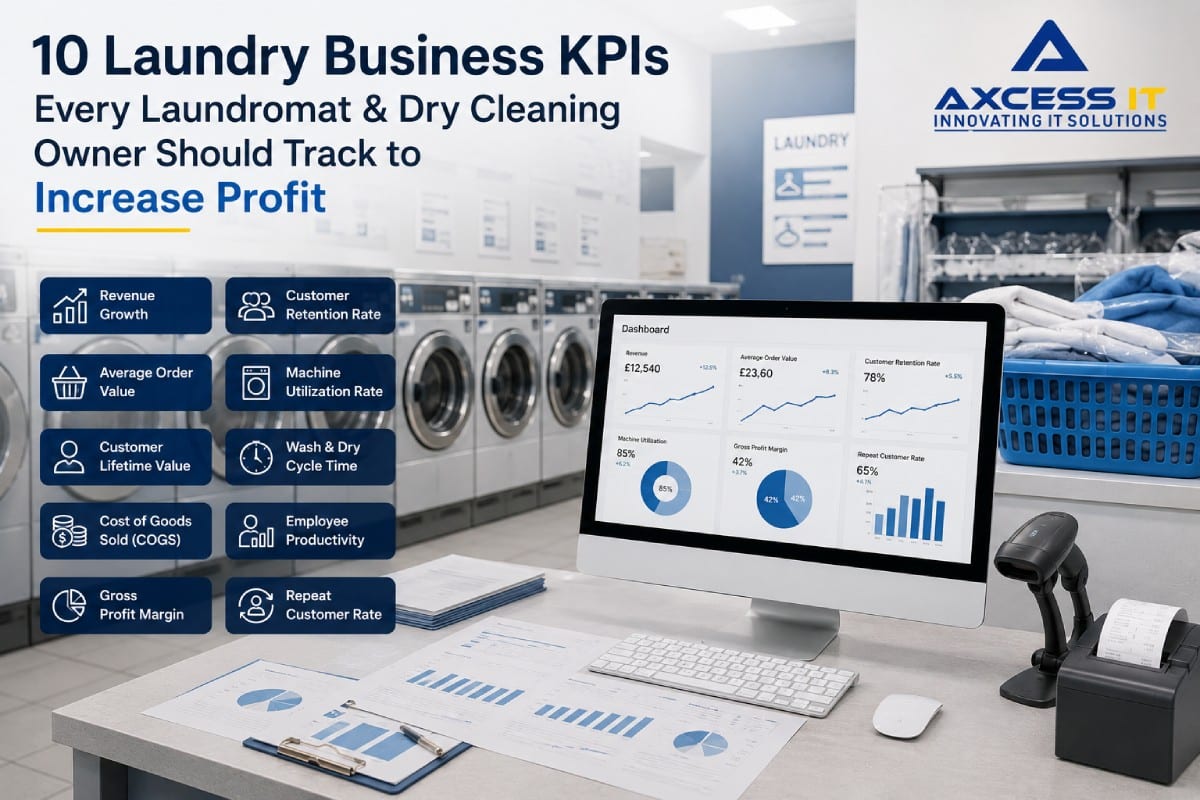
Once open, continually track KPIs like revenue per machine, customer retention, and utility costs. Regular maintenance of equipment and customer feedback monitoring are essential. As your business grows, consider expanding services such as pick-up and delivery or adding eco-friendly options to remain competitive and enhance long-term ROI for laundromats.

Due Diligence Checklist for Maximum Laundromat Profit Margin

• Audit existing laundromat financials (if buying)
• Evaluate the machine’s age and condition
• Inspect location traffic and access
• Review local competitor analysis
• Assess lease terms thoroughly
• Estimate utility costs accurately
• Implement a modern EPOS and cashless payment solution
• Plan marketing strategies for opening and scaling

How to Make Your Laundromat Business Thrive?

These are some key metrics for making your laundromat business thrive, as expected or beyond.

• Upgrade to modern washers and dryers
• Offer loyalty programs via EPOS systems
• Add complementary services (e.g., dry-cleaning, ironing)
• Focus on cleanliness and ambience
• Maintain proactive customer communication
• Leverage digital marketing for local awareness
• Analyse performance reports to make data-driven decisions

In Conclusion

The laundromat business is a highly attractive investment opportunity with strong profit potential, resilient demand, and room for innovation. With the right planning, management, and technology solutions like Clean Touch EPOS, you can maximise your laundromat business profit and build a sustainable venture.

| At Axcess IT, our Clean Touch EPOS not only simplifies your operations but also gives you actionable insights to continually optimise profits and customer satisfaction. If you’re ready to modernise your laundromat operations or are planning your first venture, contact Axcess IT today and discover how our Clean Touch EPOS solution can help you succeed.

FAQs

Is laundry business profitable?

Yes, it is. Laundromats provide essential services that are in constant demand, ensuring steady revenue and healthy profit margins.

How much do laundromats make?

The average laundromat profits can range from a few thousand £ to five-figure £ per year, depending on size, location, and service diversity.

How profitable are laundromats?

Laundromats are very profitable. With relatively low operational costs and consistent demand, laundromats often achieve higher ROI compared to many retail businesses.

book a demo

How much is a POS System?

About to install a point-of-sale system at your premises? Wondering how much is a POS system? We are here with this insightful blog to help you explore factors to consider while purchasing the system, the fluctuating costs, and everything related to the POS system costs. Let’s get started.

How Much Does a POS System Cost?

The point-of-sale system cost is a collective of many factors, mainly hardware, software, installation, licensing, and support services. These factors remain constant while the costs vary as per your business requirements and the provider you choose for the system. The average POS price range can be €€€ to €€€€ or more according to your preferences and the features you seek. Small businesses with minimal requirements can keep their budget for a hundred to a few thousand pounds while enterprise solutions can cost more.

Let’s discuss the main types of POS systems and the major influencing factors for cost:

1. Traditional POS Systems – These require a significant upfront investment in hardware and software.

2. Cloud-Based POS Systems – Often come with lower upfront costs but require a monthly subscription fee.

Breakdown of POS System Cost: Hardware & Software

POS Hardware Costs

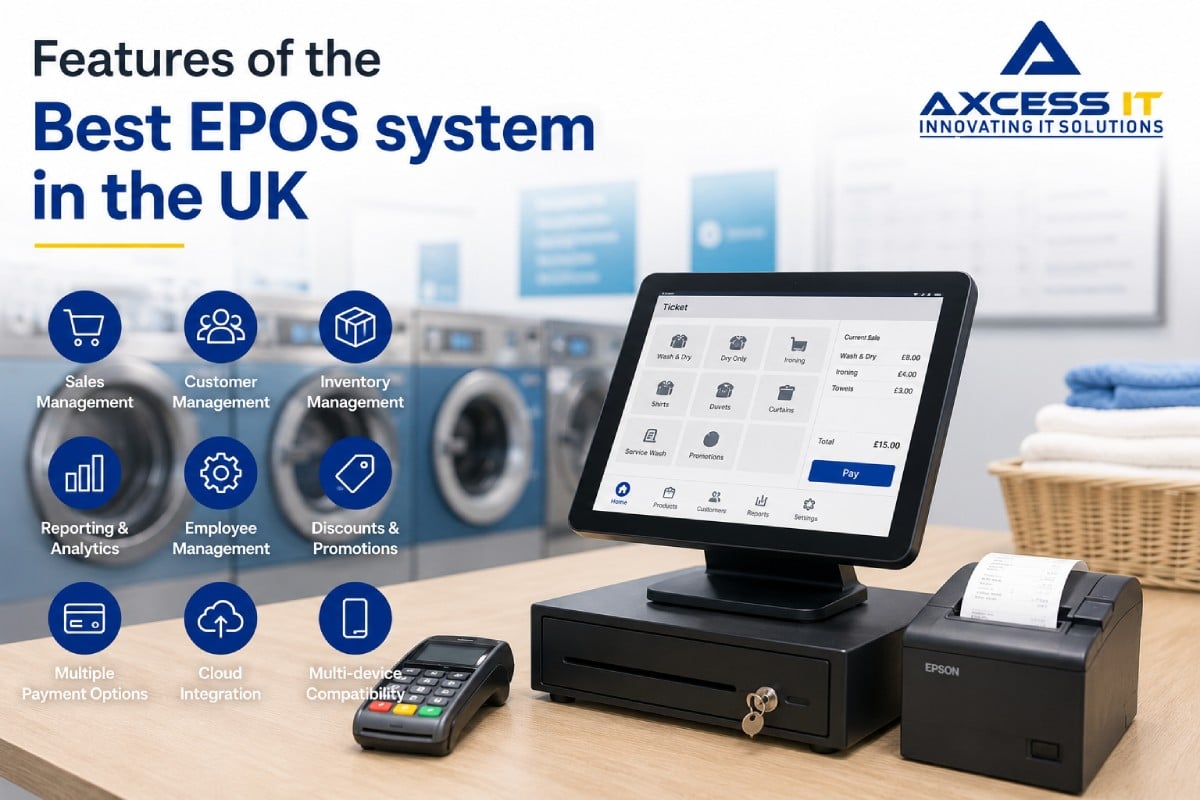
The hardware cost varies depending on the type and complexity of your business setup. Your POS hardware setup includes:

➤ Touchscreen monitor
➤ Receipt printer
➤ Barcode scanner
➤ Cash drawer
➤ Card payment terminal
➤ POS tablet
➤ Customer display

Each component can cost a few hundred of pounds while the total hardware investment stretches to a few thousand of pounds.

POS Software Costs

POS software pricing varies based on licensing models. For instance, one-time purchase will range between €€€ – €€€€ per license while subscription/cloud-based will have monthly costs. Custom-built software like Clean Touch EPOS by Axcess IT will fall into your budget as per your requested features. Some POS providers have tiered pricing model where basic packages are affordable while premium plans with advance features will cost more but worth the investment.

What Factors Affect the Cost of a POS System?

1. Hardware Requirements

The simpler your hardware setup is, the less budget it will take. This totally depends on the specific needs of your business and the kind of setup required. If your store requires multiple POS stations, the hardware cost will scale accordingly.

If you already have a hardware and thinking software upgrade will do the thing, consider compatibility too. Some POS software only works with specific hardware models, so retrofitting or replacing older devices can add to your startup expenses.

2. Software Specifications

Basic POS software with essential features like inventory tracking, payment processing, receipts, etc will cost less. Advanced software unlocks powerful capabilities but comes at a cost. Think about the in-depth inventory management, garment tracking feature, robust analytics, automated marketing, staff management, accounting software sync, and so on. No wonder they will cost more but definitely aligns with long-term goals.

If you are not sure where to start, you may prefer basic plan and then scale up as you progress.

3. Vendor Assistance for Maintenance and Support

The stronger your vendor support channel is, the better your overall POS experience will be. With top-tier support, it’s convenient to set up the system, operate smoothly and get fewer headaches
every day. As said, it’ll come with a cost.

Vendors assisting with in-person installation, offering comprehensive staff training, and 24*7 customer support may charge more than those who don’t offer such services. Some also have maintenance packages covering timely updates, bug fixes and tech support which helps when your team is not tech-savvy.

4. Size and Volume of your Business

The size and daily transaction volume directly affect POS pricing. For instance, a laundry startup may need just one terminal with basic software while a multi-store business with high-volume transactions might need a multi-terminal setup at every store for faster processing. Additional features like advanced analytics and inventory controls will be helpful too. Consider the payment processing feeds too, it varies among providers. Some POS Systems have built-in processors while others require third-party integration.

5. Cloud-Based vs. On-Premise Systems

You have to choose from a cloud-based vs. on-premise system for data hosting.

On-premise systems: They are installed locally with a large upfront cost but no recurring fees. The system and data security are in your control but the setup may be complex with mandatory updates at regular intervals.

Cloud-based systems: They are hosted online and accessible from anywhere. Such systems have subscription fee for remote access, scalability, automatic updates, and lower startup costs — ideal for small to medium-sized businesses.

Fluctuating costs of POS systems

Most of the POS system costs are associated with fixed pricing only but certain fluctuating costs also prevail, such as:

1. Training

Whenever a new employee is hired, they will be trained to operate the POS system. Very few providers offer expert-led training services at an additional cost while most leave this task to the existing team to make the new employee learn. Either way, training is a time and cost-consuming matter whether accomplished through paid sessions or reduced staff productivity during onboarding.

2. Transaction charges

Most POS providers typically charge transaction fees which is either per-sale or monthly. If you have a higher sales volume, you will be paying more as transaction charges which makes it a key factor to consider over time.

3. Number of terminals

The more POS terminals you have, the more your hardware and licensing costs will be. Depending on your business size and requirements, you may have one central terminal or multiple units across departments for each staff member. You may start small and then scale the number as required.

4. Accessibility or User permissions

Many POS solutions limit the number of users per plan. For instance, only x number of users can login or use features of the point of sale system. In situations when your team is growing or needs more logins for tracking performance/setting permissions, you’ll need to buy additional user licences which adds up to your ongoing costs.

Check for the essentials while considering POS prices

When looking for a point-of-sale system, there is nothing like one size fits all. The size of your business, its requirements and frequency of sales are the essentials to consider while looking for a POS system. More of such key factors are shared below:

Inventory management: It is an exceptional feature for businesses to be able to manage inventory through point-of-sale. When the replenishing items are not stocked timely, their impact on sales is unimagined. Ensure the POS system can track sales, thus letting entrepreneurs make informed purchasing decisions.

Sales reports & analytics: The in-depth analysis and sales reports allow businesses to understand the financial health of their business. Having a POS system that can track sales allows administrators to perform activities for boosting sales, as and when required.

Garment tracker: This feature is exclusively useful for businesses like laundry and dry-cleaning offered by Clean Touch EPOS. It allows launderers for monitoring status of garments throughout cleaning process, right from pick up till drop off alongside features like custom processing stages and info-rich garment tags.

Customer relationship management: An efficient POS system will let you manage customer relationships by sharing useful insights from the customer’s order history. Based on this data, your POS can integrate with automated marketing campaigns to boost sales online or offline.

Staff management: Besides managing core business activities and increasing sales, the best POS systems would allow optimal staff management. For instance, track clock-ins & outs, share reports on staff efficiency, help in identifying employees based on performance, etc.

The Bottom Line: How Much Does It Cost to Build a POS System?

How much is a POS System

After exploring a lot regarding the point-of-sale system cost, you now have an estimate of how much a POS system. The answer is – it depends on several factors and costs anywhere between a few thousand pounds or more, as per your requirements. The major influencing costs are:

➤ The complexity of the software
➤ The number of hardware components required
➤ Security and compliance requirements

For most laundry and dry-cleaning, cobbler & key cutter businesses, purchasing a customized POS like Clean Touch EPOS is a better decision. Our system is exclusively designed for meeting unique requirements of your niche.

Why Choose Clean Touch EPOS by Axcess IT?

➤ Free Demo
➤Tailor-made for laundry & dry-cleaning businesses
➤ Affordable pricing & flexible payment plans
➤ 24/7 customer support & training
➤ Seamless integration with accounting & payment gateways
➤ Offline card processing feature

Get Started Today!

Looking for an affordable POS System for your laundry or dry-cleaning business? Contact Axcess IT today to get a personalized quote and a free demo of Clean Touch EPOS.

FAQs

What is the cost of a POS system?

The cost of a POS system varies from €€€ to €€€€€ depending on hardware, software, and business requirements. Small businesses can expect to pay a few thousand pounds, while larger setups may invest more.

Can I get a POS for a free trial?

Yes, many POS providers offer free trials to let businesses test their systems before committing. Axcess IT provides a free demo of Clean Touch EPOS for laundry and dry-cleaning businesses.

book a demo

Credit Card Machines for Small Business: The In-depth Guide

Whether you own a small or large business or digital payment methods are expected by default. Facilitating the freedom to pay via preferred methods is a bonus you can offer to your customers beyond the services your business offers. This applies to all businesses, including laundry and dry cleaners. Choosing the right credit card machines for small businesses can impact your bottom line. But, how to choose the right one? Let’s explore.

What to Look for while choosing Credit Card Machines for Small Businesses?

Choosing the right credit card machine provider is the first of the essentials. Next, small businesses need to ensure low transaction fees, smooth payment processing, and provide a great customer experience. Here are the key factors to consider:

1. Transaction Fees & Pricing Structure

Opt for a processor whose pricing model fits as per your preferences. Check out different options, compare per-transaction fees, monthly fees and see if there are any hidden charges. Prefer a provider that fit your business model and sales volume for avoiding any hassles later.

2. Payment Methods Supported

Make sure the processor aligns with the payment methods you offer, such as chip cards (EMV), contactless payments (NFC), and digital wallets. If you don’t provide printed receipts, check if you can process digital invoicing.

3. Ease of Use & Integration

Ensure that your credit card machine integrates seamlessly with your existing point-of-sale (POS) system, accounting software, and business tools. Prioritize user-friendly hardware and software to avoid long setup times.

4. Security & Compliance

Security is something to never outlook. Any processor you choose should be compliant to regulatory standards for protecting payment information of the customers. See if it has fraud prevention features like encryption, tokenization, and chargeback protection.

5. Customer Support

You never know when you’ll need any help. Choose a provider offering 24*7 customer support, which is available via call, live chat or email. Remember, strong support can help in resolving transaction issues quickly.

6. Contract Terms & Flexibility

If the provider has long-term contracts with high-cost cancellations, don’t go for it. It’s better to select the ones offering monthly agreements without any hidden penalties.

7. Reputation & Reviews

Don’t forget to check out the customer reviews and ratings on platforms like Trustpilot and Better Business Bureau (BBB) before proceeding with one. Also, consider their reliability, uptime, and overall satisfaction rate.

Evaluating these factors carefully will help you select credit card machines that fits your needs. It will also reduce costs, improve efficiency & provide seamless payment experience to the customers.

Payment Options & Card Machine for Small Business

After exploring the must-have specifications of a credit card machine, let’s see the payment options to offer for optimal customer satisfaction. Check if the processor accepts:

➤ EMV Chip & Pin Payments

➤ Contactless Payments

➤ Digital Wallets

Considering The Credit Card Processing Fees

The processing fees vary according to the credit card provider you choose, daily transaction volume, type of card used, etc. Here are the top considerations to make:

➤ Interchange Fees: Charged by card networks (Visa, Mastercard, etc.), typically 1.5% – 3% per transaction.

➤ Merchant Service Fees: Additional charges by providers, sometimes flat-rate or percentage-based.

➤ Monthly Fees: Some providers charge a flat monthly service fee.

➤ Chargeback Fees: In case of disputes, a chargeback fee may apply.

Make sure to compare providers to find the best rates for your business.

Importance of having Credit Card Machines for Small Businesses

You may wonder if your small business even needs credit card terminals or you can wait for the business to grow and then have it installed. Let us share the importance of having this machine at checkout so you don’t miss out on this essential.

1. Convenience for Customers – A lot of consumers prefer cashless payments, and having a credit card machine ensures they can make purchases easily. It helps in enhancing customer satisfaction while encouraging repeat business.

2. Increased Sales and Revenue – Studies show that customers tend to spend more when using cards compared to cash. Accepting credit cards can lead to higher transaction amounts and improved profitability.

3. Competitive Advantage – Small businesses that offer multiple payment options can compete more effectively with larger retailers and online stores. Not having a credit card machine may turn customers away.

4. Security and Fraud Prevention – Modern credit card machines use encryption and secure transaction processing to protect customer data. It helps in preventing frauds and builds trust with customers.

5. Faster Transactions – Compared to handling cash and providing change, card payments are quicker and more efficient, reducing long checkout lines and improving operational efficiency.

6. Better Record-Keeping – Credit card machines automatically generate transaction records, making it easier for businesses to track sales, manage inventory, and simplify accounting.

7. Integration with Other Business Tools – Many credit card machines integrate with point-of-sale (POS) systems, inventory management software, and customer loyalty programs, streamlining business operations.

Having credit card machines at checkout is more than a customer experience. It boosts sales and operational efficiency in this competitive market, particularly for laundry and dry-cleaning businesses where wait queues grow faster otherwise.

How to set up your Credit Card Machine, use it right & maintain it well?

With proper setup, usage and maintenance, you can ensure the smooth functioning of your credit card machine. Here’s a stepwise guide on how you can do it right.

1. Setup

➤ Choose the Right Machine – Decide between a countertop, wireless, or mobile card reader based on your business needs.

➤ Connect to a Payment Processor – Work with a merchant service provider to process transactions securely.

➤ Install and Configure – Follow the manufacturer’s instructions to set up the machine, connect it to the internet or phone line, and configure settings.

➤ Test Transactions – Run test payments to ensure the system works correctly before going live.

2. Usage

➤ Accepting Payments – Insert, swipe, or tap the customer’s card, or process digital wallet payments like Apple Pay or Google Pay.

➤ Processing Refunds – If needed, follow the refund procedure on the machine, ensuring compliance with the refund policy of your business.

➤ Handling Errors – No wonder the customer support available 24*7, you can learn to troubleshoot common issues for uninterrupted transactions. For instance, know how to handle declined transactions, connectivity problems, or paper jams in receipt printers.

3. Maintenance

Regular Software Updates – Keep the machine updated to ensure security and compliance with industry standards.

Clean the Device – Dust and debris can interfere with card readers. Wipe down the machine regularly.

Check Connectivity – Ensure your Wi-Fi, phone line, or Ethernet connection is stable to avoid transaction failures.

Monitor Security – Watch for signs of skimming devices and unauthorized access to keep transactions safe.

Upgrade Your Credit Card Machine with Axcess IT

Credit Card Machines for Small Business

Axcess IT offers Clean Touch EPOS, a state-of-the-art system tailored for Laundry and Dry-Cleaning Businesses, Cobblers & Key Cutters. You can ensure your credit card terminals process transactions smoothly while keeping security and compliance at the forefront.

Why Choose Axcess IT?

➤ Seamless POS swipe machine integration
➤ Secure transactions with EMV compliance
➤ Affordable rates with transparent pricing
Offline credit card processing feature
➤ Exceptional customer support to assist your business

What Can Axcess IT Do for Your Business?

By upgrading your POS with Clean Touch and integrating with credit card machines, you benefit from:

➤ Faster checkout speeds, reducing customer wait times
➤ Advanced reporting tools to track sales and trends
➤ Reliable hardware with fewer connectivity issues
➤ Custom solutions tailored to your industry’s needs

Schedule a demo today to see how Axcess IT can transform your business operations.

Final Lines

Investing in the right credit card machines can improve customer experience, increase sales, and streamline business operations. Whether you’re a startup or a well-established business, the right machine makes all the difference. Explore different options, compare pricing, and choose a provider that aligns with your business goals.

FAQs

1. How are Credit Card Machines for Small Retailers Helpful?

Credit card machines enable small retailers to accept multiple payment methods, reducing cash dependency and enhancing sales opportunities.

2. How to Choose a Reliable Credit Card Solution?

Look for providers with competitive transaction rates, security compliance, and good customer support. Also, ensure integration with your POS system.

3. Which are the Best Credit Card Machines for Small Businesses?

Conduct research online or check out reliable sources for finding your best credit card machines for small businesses.

4. Do I Need an Internet Connection for a Credit Card Machine?

Most modern machines require an internet connection, but some offer offline credit card processing guide features to handle transactions without immediate connectivity.

5. How Secure Are Credit Card Machines?

Modern terminals use encryption, EMV chip technology, and tokenization to protect transactions, making them highly secure for both businesses and customers.

book a demo

Decoding POS reconciliation for Dry Cleaners & Launderers

Laundry and dry-cleaning are businesses with many financial transactions happening daily. From tracking sales to classifying cash and card payments, each aspect holds importance for maintaining profitability. Still a lot of business owners are struggling to do it right or think regular sales reconciliation is time-consuming. Here’s when you need POS reconciliation to get things done with ease and accuracy.

This blog, we’ll be decoding Point-of-sale (POS) reconciliation while exploring its importance for launderers and how they can simplify daily reporting with the right tools like Clean Touch EPOS.

How to Use POS Reconciliation for Spotting and Resolving Discrepancies?

When executed well, end of day reconciliation process can help businesses detect errors (such as missing transactions, incorrect cash balance, or discrepancies between recorded and actual sales).

By performing daily reconciliation reporting regularly, laundry and dry-cleaning businesses can ensure the accuracy of records, and decline financial risks while improving transparency.

The key benefits of conducting reconciliation of sales includes:

➤ Detecting theft or fraud

➤ Maintaining accurate financial records

➤ Identifying payment processing errors

➤ Ensuring the correct recording of cash and card transactions

Stepwise Guide to POS Reconciliation

POS reconciliation

It’s quite simple to perform cash drawer reconciliation and avoid unnecessary errors by following these steps:

Step 1: Gather Financial Records

Make sure to have access to all the sales receipts, transaction logs and sales reports through your POS back office system. This is the first and most vital step to have control over all the daily transaction details.

Step 2: Count Cash in the Till

While launderers facilitate multiple payment processing modes, don’t forget to perform manual cash reconciliations. Count the physical cash in the register and compare it to the POS records.

Step 3: Compare POS Sales with Bank Deposits

Match total sales from your POS system with bank deposits and credit card settlements to ensure everything aligns.

Step 4: Review Discounts, Voids, and Refunds

Check for any anomalies in sales records, such as unauthorized refunds or excessive discounts.

Step 5: Document and Report Discrepancies

If there are any discrepancies, document them and investigate possible causes.

Step 6: Adjust Records as Necessary

Make any necessary adjustments and ensure your financial reports reflect accurate figures.

Performing end of day cash reconciliation can save you a lot of time and effort later. Initially, it may seem time-consuming, but once you make it a routine, it’ll be done swiftly and you’ll find a grip on the daily tally process which is ultimately better for your business and finances. Also, this simple process allows you to make vital decisions for your business – identify the areas requiring improvements, ways to increase sales, figure out the fraudulent/low-performing staff, and take necessary actions timely.

Tips for Streamlining Your POS System Reconciliation

1. Automate Where Possible

Using an advanced POS system like Clean Touch EPOS can automate many aspects of reconciliation, reducing manual errors.

Let us give you a sneak peek into Day-End Reconciliation with Clean Touch.

Clean Touch EPOS offers multiple ways to conduct end-of-day cash reconciliation, making it easier for launderers to manage finances efficiently.

1. Different Day-End Options: Clean Touch provides two methods for performing day-end reconciliation:

➤ Compulsory Cash Declaration – This method enhances security by requiring employees to manually count and enter cash amounts without system prompts, reducing the risk of manipulation.

➤ Standard Day End – The system prints a day-end report, allowing employees to count cash and verify amounts manually against the printed report.

2. Flexible Float Management: Clean Touch offers three float options to suit different business needs:

➤ Fixed Float – Automatically resets a predefined float amount after each day-end or once per day.

➤ User-Definable Float – Allows users to specify a float amount during compulsory cash declaration.

➤ No Float – Users can manually add a float from the login screen or day-end screen when required.

3. Multiple Day-End Frequencies: Business owners can perform the day-end reconciliation once per day (standard) or multiple times a day for shift reconciliation. If float adjustments are made only once a day, the system applies them to the final day-end of the day.

By implementing these structured reconciliation options, launderers can ensure smoother financial management and reduce discrepancies effectively.

2. Set a Regular Reconciliation Schedule

Perform shift reconciliation after every shift or at least once daily to catch issues early.

3. Use Integrated Payment Processing

A POS system with integrated payment processing reduces discrepancies between recorded sales and actual deposits.

4. Train Employees on Proper Cash Handling

Prevent errors and fraud by educating staff on best practices for end of day cash reconciliation.

Wrapping Up

Efficient POS reconciliation is vital for maintaining financial accuracy in a laundry business.

By following the right steps and leveraging tools like Clean Touch EPOS, you can simplify the process and focus more on growing your business. With features like compulsory cash declaration, standard day end, and flexible float options, the EPOS ensures smooth and error-free reconciliation every day.

Contact us & Schedule a FREE CONSULTATION today!

FAQs

What is POS reconciliation? Is it important?

POS reconciliation is the process of matching POS sales data with actual cash and bank transactions.

It helps prevent fraud, detect errors, and maintain accurate financial records.

How do POS reconciliation and financial reconciliation differ?

POS reconciliation focuses on verifying daily sales and cash transactions, while financial reconciliation involves reconciling broader financial statements, including bank records and expenses.

What are the key aspects of point-of-sale reconciliation?

Key aspects include verifying sales records, counting cash, checking deposits, and identifying discrepancies.

How often should launderers do POS system reconciliation?

It is best to create a daily reconciliation report by performing the process daily or after every shift to minimize errors and prevent financial losses.

What is the POS reconciliation process with Clean Touch EPOS?

Clean Touch EPOS provides two methods: Compulsory Cash Declaration, which ensures transparency by requiring manual entry of counted cash, and Standard Day End, which prints reports for verification.

How to ensure the accuracy of POS reconciliation results?

Using an automated POS system, setting reconciliation schedules, and training staff in cash drawer reconciliation best practices can improve accuracy.

Is it possible to outsource POS reconciliation?

Yes, businesses can outsource reconciliation to accounting professionals, but using an efficient POS system like Clean Touch EPOS reduces the need for outsourcing by simplifying the process in house.

It’s breezy to perform Daily reconciliation reporting on-the-go.

book a demo

What is a Contactless POS system?

Imagine the convenience of services when your customers can check out easily with contactless POS systems. No longer waiting lines and more transactions processed in less time. With the increasing acceptance of digital transactions, most businesses have embraced the power of contactless payments which ultimately enhances customer experiences. Faster payment processing also streamlines business operations to a great extent.

This blog will make you explore what a Contactless POS system is, how it works, its benefits, and more. We’ll also see the difference it’ll make by installing Clean Touch EPOS by Axcess IT for easing transaction processing.

What Is a Contactless point-of-sale system?

A contactless point-of-sale system is an innovative payment solution that increases the convenience of online payments. It allows customers to pay without requiring them to insert a card or enter a PIN. This contactless mode of payment relies on technologies like NFC (Near-Field Communication) and RFID (Radio-Frequency Identification).

Such systems are easily located at checkouts across niches to enable fast, secure, and convenient transactions. The main components include:

1. POS terminal

2. Contactless card reader

3. Software that processes payments instantly (for instance, Clean Touch EPOS)

How do Contactless POS Systems Work?

As the term suggests ‘contactless’, the customer only needs to hold their credit or debit card for payment. Alternatively, having a smartphone or RFID-enabled device near the POS terminal would work too. Contactless payments will be processed using the NFC technology in the contactless card reader that transmits encrypted payment data. The transaction processing happens within a few seconds through the terminal, without requiring physical contact.

This quick, secure, and efficient POS contactless process makes for an ideal choice among busy laundry businesses.

What Are the Contactless Payment Options Available?

Contactless POS system

Most systems facilitating Contactless POS support a variety of payment methods to ensure flexibility for customers. The common ones include:

Contactless Card Payments: You can find contactless payment card readers installed at most outlets for easy payments on the go. The NFC technology allows users to tap and pay and the transaction is processed seamlessly via contactless payment machines.

Digital Wallets: Smartphone payments are gaining popularity. These payments are made using apps like Apple Pay, Google Wallet, and Samsung Pay securely. Such apps are designed to store card information securely to enable users to pay with a quick tap. These solutions use NFC technology and advanced encryption for secure checkouts.

QR Code Payments: With the changing technology, newer contactless payment solutions enter the market – QR code. It’s a simple and flexible alternative to cards. Customers only need to scan a QR code displayed by the business to initiate and authorize the payment. It is ideal for both in-store and online businesses.

Smartwatches and Wearables: Wearable devices like smartwatches add up to the convenience of contactless payment methods. These devices are already equipped with NFC which allows the users to pay with a flick of the wrist. It’s just perfect for those who prefer a hands-free lifestyle.

Tap-to-Pay Apps: Combining the convenience of digital wallets with extra features, tap-to-pay apps offer benefits like loyalty rewards and spending analytics, providing a more comprehensive payment experience.

RFID Watches and Readers for Staff Management: Beyond customer payments, RFID technology is also transforming staff management.

Many businesses, including laundries and dry cleaners, use RFID-enabled watches and readers to streamline employee clock-ins and clock-outs. While staff can log in with their smartwatch itself, excuses for late clock-ins and password thefts decline. Businesses can monitor staff performance and track revenue generation by specific employees. Overall security of checkouts is enhanced too.

This contactless solution ensures accurate time tracking and reduces manual processes, enhancing overall operational efficiency.

Do Launderers Provide Contactless Payments Facility?

Yes, many laundry and dry-cleaning businesses have now adopted this modern mode of payment considering customer preferences.

With smart and efficient POS contactless software like Clean Touch EPOS, launderers can accept payments without cash, speeding up transactions and improving overall customer satisfaction. The convenience of contactless payment machines also attracts tech-savvy customers who prefer quick and secure payment methods.

Are Contactless Credit Cards Safe?

Yes, they are safe! Don’t worry about security at all because credit or debit cards are now designed with advanced encryption for protecting sensitive information. Each transaction generates a unique code that cannot be reused, minimizing the risk of fraud. Additionally, the limited range of NFC technology ensures that payments only occur when the card is intentionally placed near the contactless card reader.

What Are the Benefits of Contactless Payments for Laundry & Dry-Cleaning Businesses?

1. Faster Transactions and Improved Customer Experience

As the payments will be processed in no time, the time spent per customer is significantly reduced. Customers can pay within seconds which improves their overall experience with your business. No wonder the services will be accomplished speedily and queues will be cleared faster too.

2. Reduced Cash Handling and Enhanced Hygiene

Cashless transactions need no physical cash handling. The risk of theft is reduced too, accounting operations are streamlined and better hygiene is maintained. Such features make this payment mode a favourite among health-conscious individuals.

3. Simplified Staff Management with RFID Watches and Readers

Contactless POS (point of sale) systems are not just for the benefit of seamless customer payments but also simplify staff management. Using RFID watches and readers, businesses can automate clock-ins and clock-outs, ensuring accurate attendance records and reducing manual errors.

Clean Touch EPOS: Designed to Accept All Major Types of Payments

Clean Touch EPOS by Axcess IT is uniquely made for laundry and dry-cleaning businesses. This advanced POS terminal accepts all major contactless payment methods, including credit cards, mobile wallets, and RFID devices.

Its user-friendly interface simplifies transactions, while built-in contactless payment machines ensure quick and secure payments. Plus, with RFID readers, businesses can automate staff clock-ins and improve workforce management.

Summary

While contactless POS systems are finding space at business premises and enhancing customer experiences, make sure your laundry and dry-cleaning business offers one too. You’ll be thankful to this technology for streamlining your business operations.

From accepting contactless payments to automating staff management with RFID technology, solutions like the Clean Touch EPOS system by Axcess IT offer the perfect blend of speed, security, and convenience. By adopting these modern payment solutions, laundry and dry-cleaning businesses can stay competitive, improve efficiency, and deliver exceptional service.

FAQs

1. What is the use of a contactless point of sale (POS) system?

The contactless POS system is used by businesses to accept payments without requiring customers to hand over a card to customers or enter a PIN. It is recognized for improving transaction speed, security, and customer convenience.

2. Can smartphones be used as POS systems?

Yes, smartphones can be used as a POS system (with compatible apps and NFC technology only). They can allow businesses to accept contactless payments anywhere.

3. Do I have to pay any charges for using a contactless payment facility?

Yes, a small transaction fee is charged by most contactless payment providers against the speedy transactions and improved customer experiences.

4. How secure is RFID technology for staff clock-ins?

It is highly secure and uses encrypted signals to prevent data theft/unauthorized access. Businesses can ensure accurate time-tracking (clock-ins and clock-outs) without leveraging employee data to risk.

5. Is Clean Touch EPOS suitable for small laundry businesses?

Yes, it is a reliable contactless payment solution for small to large laundry businesses. Our system is scalable and flexible enough to streamline payments as per business requirements and workforce management.

book a demo